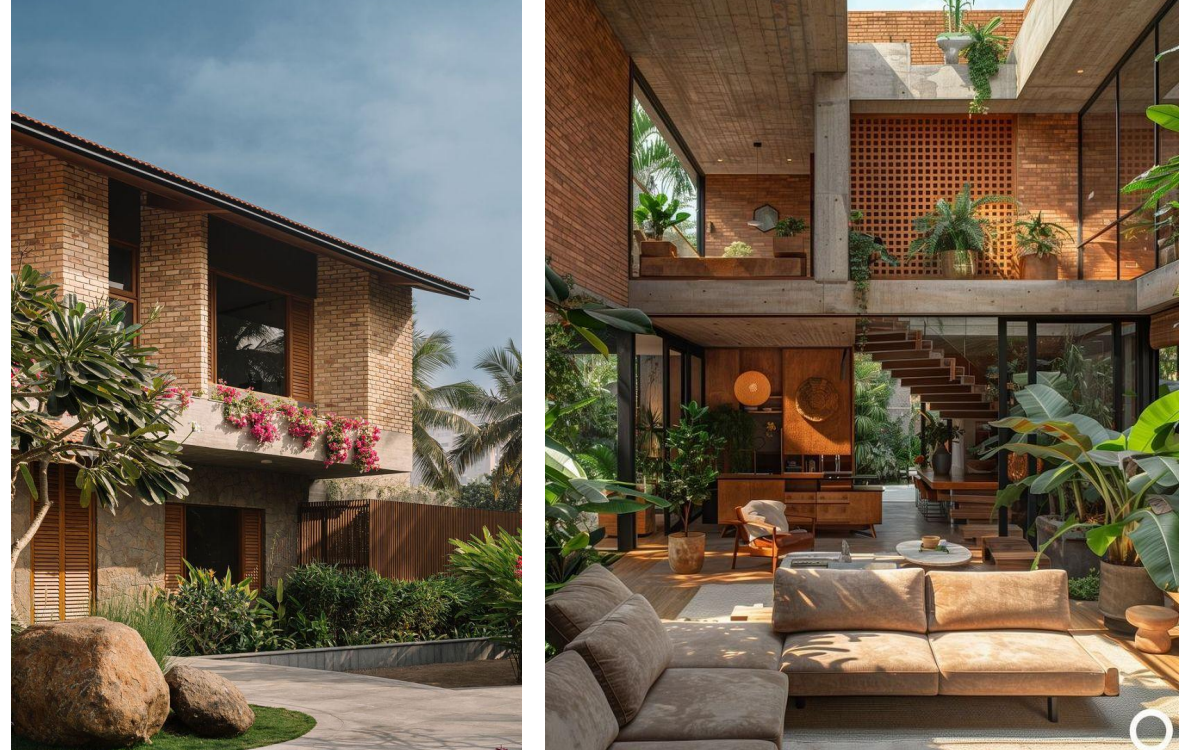
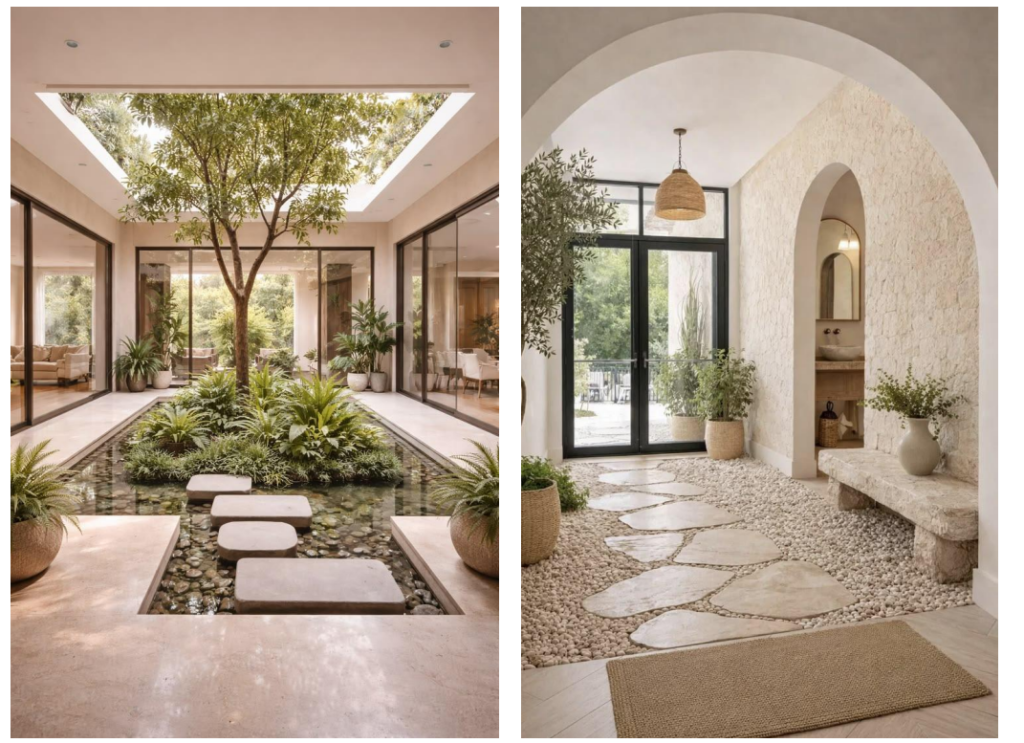
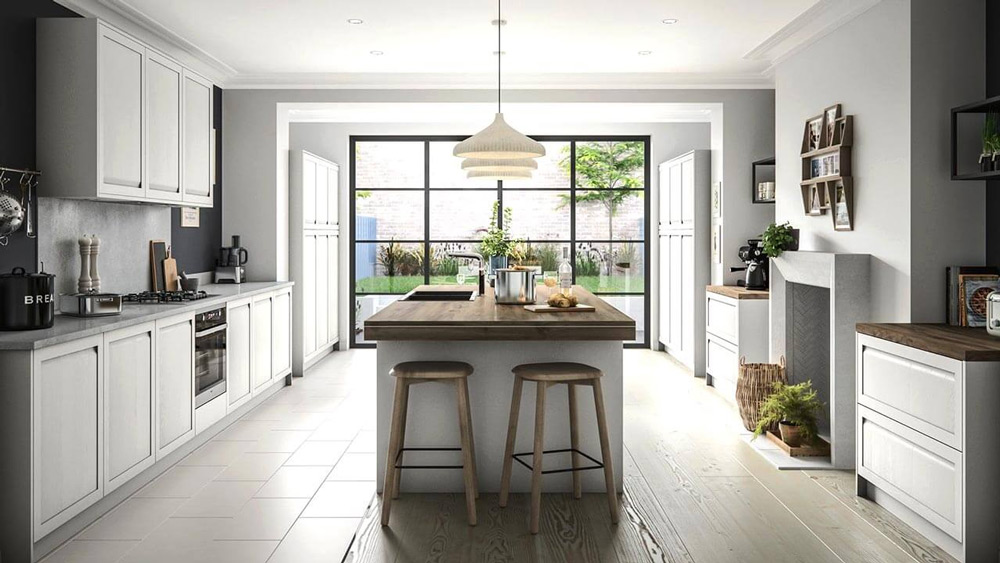
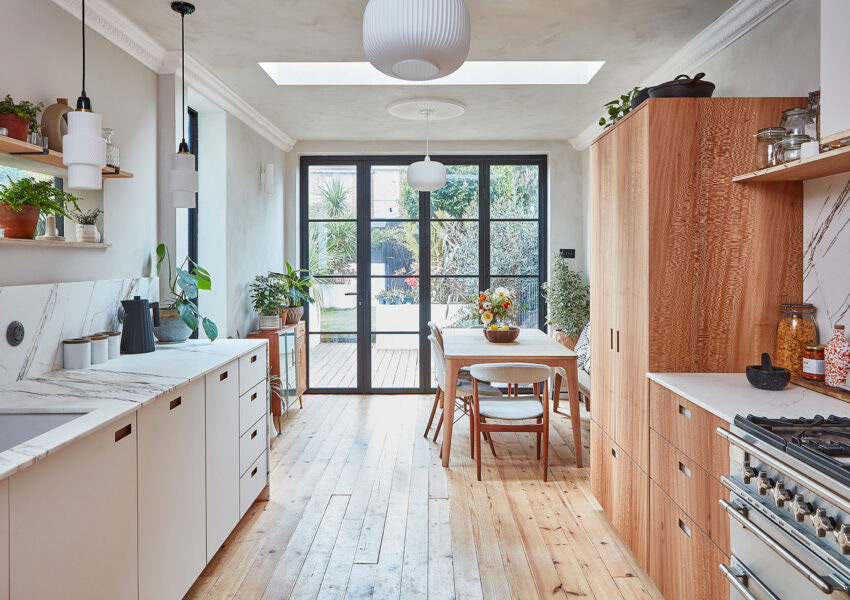
Maximize Natural Light Design large windows, skylights, and open layouts to bring in abundant daylight. Use sheer curtains or screens to soften light while maintaining a connection to the outdoors.
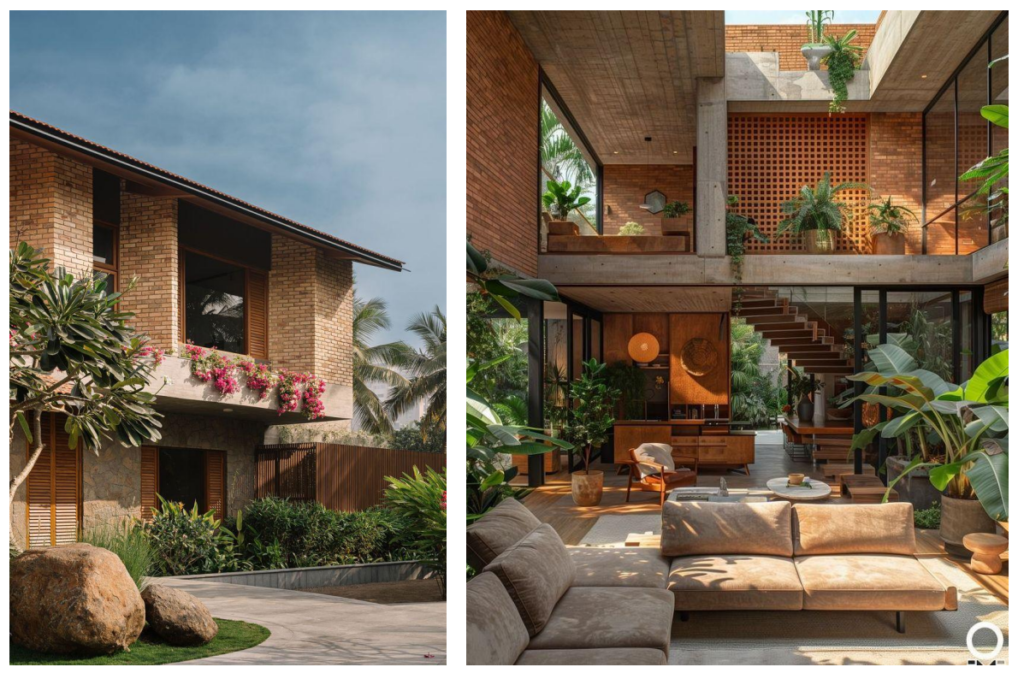
Create Indoor-Outdoor Flow Blur boundaries with balconies, courtyards, terraces, or sliding glass doors. Even small transitional spaces can make homes feel more open and connected to nature.
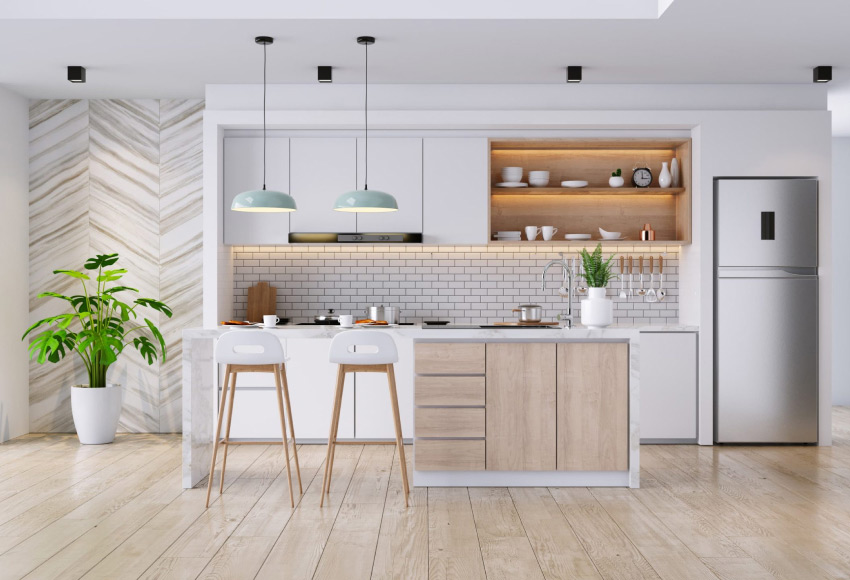
Introduce Greenery Incorporate indoor plants, vertical gardens, or courtyard trees. Choose low-maintenance species and integrate planters into the architecture itself.
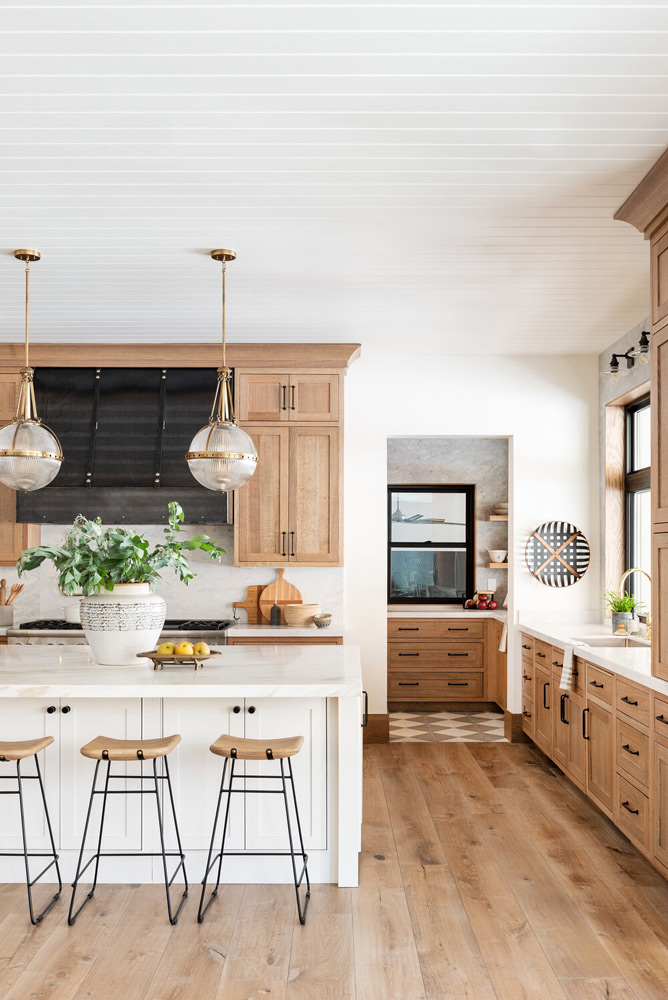
Use Natural Materials Opt for materials like wood, stone, terracotta, lime plaster, and bamboo. Keep finishes matte and tactile to enhance the sensory experience.
Design for Ventilation Encourage cross-ventilation through strategic openings, jaalis, and ventilators. Fresh air flow improves comfort and connects occupants with the outside climate.
Add Water Elements Small features like indoor fountains, water bowls, or reflecting pools can introduce calming sound and visual movement.
Frame Views of Nature Position windows and seating areas to capture views of trees, sky, or landscape. Even curated views can create a strong psychological connection. Use Earthy Color Palettes Incorporate greens, browns, muted blues, and warm neutrals inspired by nature to create a calming environment.
Incorporate Natural Patterns & Textures Use organic forms, curves, and patterns inspired by leaves, waves, or natural geometry in flooring, walls, or furniture.
Create Sensory Experiences Engage all senses—fragrance (plants, incense), sound (wind, water), touch (textures), and light—to make the space feel alive and restorative.
Design Quiet Retreat Corners Include spaces for pause—like a window seat, meditation corner, or small courtyard—to encourage mindfulness and relaxation.
Be Climate Responsive especially in India ● Use shading devices (chajjas, jaalis) ● Orient the building correctly ● Use thermal mass materials ● Integrate local vegetation